Uptime Bot
October 10, 2026
Why we built Uptime Bot
In a few of our smaller projects, we noticed short outages on the server or API side hours later, through complaints from users. When we looked at the off-the-shelf monitoring tools on the market, they were either overly complex (enterprise packages, dozens of features we wouldn't use) or the price/feature balance didn't make sense for side projects. We decided to build a "simple, cheap, does-the-job" alternative — that's how Uptime Bot (uptimebot.tr) was born.
What is Uptime Bot
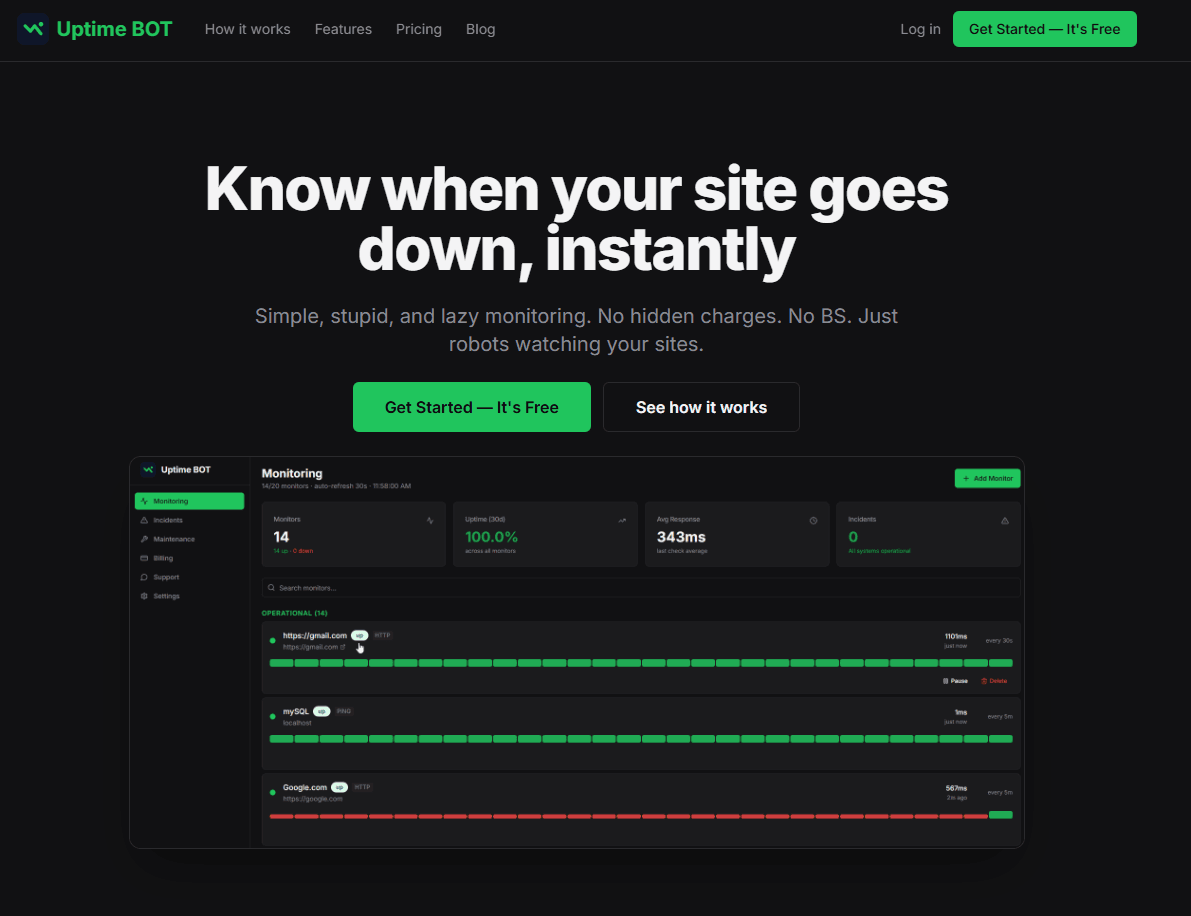
Uptime Bot is a site/server monitoring (uptime monitoring) application that checks your website, API or any server service at regular intervals and instantly alerts you if something goes wrong. The goal is simple: you should hear about your site going down from Uptime Bot, not from a customer.
What it offers
- HTTP/TCP/PING monitoring — track a website, an API endpoint or any TCP service.
- Email alerts — instant notification when a monitor goes down and when it comes back.
- SSL certificate tracking — get warned before a certificate expires, no more "certificate expired, site looks unsafe" surprises.
- Public status pages — share the live status of your services with your users transparently.
- Escalating reminders — notifications repeat at set intervals until an outage is resolved, reducing the risk of a single email going unnoticed.
- Maintenance windows — no false "outage" alerts during planned maintenance.
How we built it: technical architecture
We built Uptime Bot end-to-end with our own team. The frontend is Next.js 15 (App Router), TypeScript and Tailwind CSS; the backend runs on Express.js + Prisma ORM with MySQL/MariaDB. A deliberate architectural choice: we didn't need Redis or a Docker-based queue system to distribute the monitoring work across multiple "workers" (check processes) — instead we wrote our own horizontally scalable scheduler logic that works through atomic claimed_by/claimed_at updates on MySQL. On the first failed check (emergency check), the check frequency automatically increases — this distinguishes brief network blips from a real outage and avoids unnecessary alerts. We integrated Paddle for payments; nothing from pricing to the site copy in the admin panel is hardcoded — it's all managed from the database.
Who it's for
We built this for developers, agencies and small teams with a side project, a small SaaS or client sites — a budget-friendly solution that meets the "be the first to know when your site goes down" need, without the complexity and cost of enterprise monitoring tools.
Pricing
| Plan | Price | Monitors | Check frequency |
|---|---|---|---|
| Free | $0/mo | Up to 20 | 300 sec |
| Pro | $1.99/mo | Up to 100 | 60 sec |
| Team | $5.99/mo | Up to 500 | 30 sec |
The free plan starts without requiring a credit card; all plans include email alerts and a status page. See current pricing at uptimebot.tr/pricing.
Conclusion
Uptime Bot is an example of both a need we had ourselves and our end-to-end approach to software development and project consulting. If you have a similar idea and want to bring it to life, get in touch here; if you'd like to try Uptime Bot directly, you can start for free at uptimebot.tr.